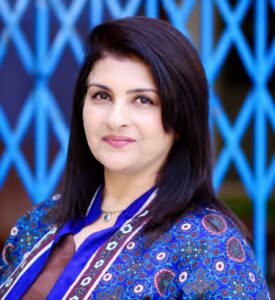
Nazia Ansari is a distinguished human rights advocate, educationist, humanitarian leader, and champion of women’s empowerment in Pakistan. As Executive Director of Interfaith League Against Poverty-Pakistan (I-LAP), she leads initiatives focused on social justice, poverty alleviation, interfaith harmony, education, and the empowerment of marginalized communities. Throughout her career, she has been a steadfast advocate for the rights of religious minorities, the promotion of religious freedom, and equitable access to opportunities for vulnerable populations. Her work has contributed significantly to community development, peacebuilding, and social cohesion across Pakistan.
In her leadership role at I-LAP, Ms. Ansari has spearheaded numerous humanitarian assistance and community development programs aimed at improving the lives of underserved communities. She has overseen relief, rehabilitation, and reconstruction initiatives that have provided direct support to vulnerable populations. Under her guidance, I-LAP has implemented large-scale projects including food assistance programs, rehabilitation of agricultural land, provision of agricultural inputs to thousands of farmers, and distribution of livestock to thousands of women to strengthen livelihoods and economic resilience. She has also facilitated the formation of hundreds of Community-Based Organizations (CBOs), expanded access to clean drinking water for thousands of families, and led community development training programs focused on hygiene promotion, self-help initiatives, microfinance, livelihood development, and community empowerment. She supervised the construction of over 1,300 One Room Shelters (ORS) for flood affected families in three provinces including Punjab, Sindh, and Khyber Pakhtunkhwa.
Recognizing the transformative power of education, Ms. Ansari played a leading role in establishing the The Institution of Emerging Leaders (TiEL) school system under I-LAP. The initiative was created to provide quality education to children from marginalized, underprivileged, and neglected communities. Through her strategic vision and commitment to educational inclusion, deserving children have gained access to learning opportunities that support their long-term growth and development. She has also provided executive oversight to five organizational offices—four regional offices and one head office—and successfully managed a workforce of 187 staff members, strengthening I-LAP’s capacity to deliver impactful humanitarian, educational, and development programs nationwide.
A central pillar of Ms. Ansari’s work is her unwavering commitment to religious freedom, interfaith harmony, and peacebuilding. She has organized and facilitated dialogues, talk shows, roundtable discussions, press briefings, workshops, and collaborative initiatives that bring together religious leaders, policymakers, civil society representatives, and community members from diverse faith backgrounds. These engagements have fostered mutual understanding, trust, and cooperation while creating platforms for constructive dialogue on issues of shared concern. Her peacebuilding efforts are rooted in the conviction that sustainable development, social cohesion, and lasting peace can only be achieved through inclusivity, respect for diversity, and collective action. By promoting interfaith understanding and encouraging meaningful engagement among communities, she has contributed to reducing tensions, preventing conflict, countering discrimination, and building stronger relationships among groups that have historically experienced marginalization. Through these initiatives, Ms. Ansari continues to advance a culture of tolerance, coexistence, and mutual respect across Pakistan.
Beyond her humanitarian and educational work, Ms. Ansari is actively engaged in human rights advocacy and civic engagement. She collaborates with civil society organizations, research institutions, and policy stakeholders to advance awareness of minority rights issues and advocate for meaningful reforms. Through engagement with government agencies, policymakers, development partners, and human rights bodies, she works to address challenges faced by vulnerable communities and promote evidence-based solutions that strengthen inclusion, equality, and justice.
Her ability to bridge grassroots realities with policy-level engagement has established her as a respected voice on issues affecting religious minorities, women’s empowerment, education, and social justice. By combining strategic leadership, humanitarian action, and advocacy, she has developed initiatives that are both practical and transformative, creating lasting benefits for communities across Pakistan.
Under Ms. Ansari’s leadership, I-LAP has grown into a respected organization recognized for its holistic approach to development, human rights, and interfaith collaboration. Through innovative programs and strategic partnerships, the organization continues to empower individuals, strengthen community resilience, advance legal and social protections, and promote environments of tolerance, equity, and peaceful coexistence.
Nazia Ansari is a visionary leader, humanitarian advocate, human rights defender, and interfaith peacebuilder whose contributions have had a profound impact on marginalized communities throughout Pakistan. Through her work in education, religious freedom, minority rights, women’s empowerment, humanitarian assistance, and peacebuilding, she continues to advance equality, inclusion, and social justice while creating opportunities for vulnerable communities to live with dignity, security, and hope.